
Teaching Kids to Think Creatively: 7 Strategies for Elementary School Counselors

Lynne Watts

Author & Counselor
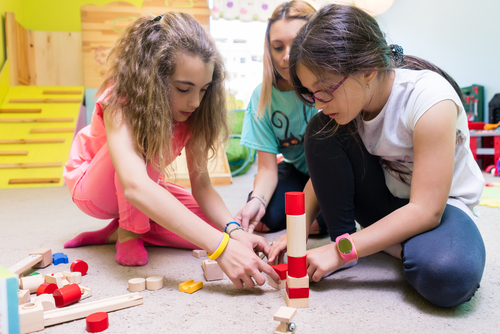
Fortunately, creative thinking is not a skill reserved for naturally artistic or imaginative children. It can be practiced and strengthened.

Here are seven practical strategies elementary school counselors can use to encourage creative thinking.

1. Narrow the Field

It may seem like giving children unlimited choices would encourage creativity. Surprisingly, too many choices can sometimes have the opposite effect.

When students are given an enormous number of possibilities, they may become overwhelmed and have difficulty getting started.

Instead, narrow the field.

Give students a specific challenge or a few parameters.

For example:

Instead of:

“Invent something.”

Try:

“Invent something that could make recess easier, safer, or more fun.”

Instead of:

“Write a story.”

Try:

“Write a story about a character who has to solve a problem without using technology.”

Instead of:

“Draw anything you want.”

Try:

“Create a new animal by combining two animals you already know.”

Boundaries can actually stimulate creativity because students have a starting point.

Counselor Tip

During a small group, give students one common challenge and ask each student to develop a different solution. Then have students compare their ideas.

They will quickly discover that the same problem can have many different solutions.

2. Reframe the Problem: Ask “What If It’s Possible?”

Children can easily get stuck thinking about why something won’t work.

“I can’t.”

“That’s impossible.”

“We already tried that.”

“Nobody would do that.”

“I don’t know how.”

Instead of immediately focusing on limitations, teach students to reframe the problem.

Ask:

“What if it’s possible?”

This simple question changes the conversation.

For example:

Problem: “Our school doesn’t have enough space for everyone to play.”

Instead of asking, “Why can’t we fix this?”

Ask:

“What if it were possible? What could we do?”

Students might suggest rotating playground schedules, creating new activity stations, using different areas of the school, or designing indoor activities.

The goal isn’t necessarily to find a perfect solution.

The goal is to open the door to possibilities.

Try This in Counseling

Present students with an imaginary problem and tell them:

“For the next five minutes, we’re not allowed to say that an idea is impossible.”

Then brainstorm.

This activity teaches students to temporarily suspend limitations and generate possibilities before evaluating them.

3. Separate Research From Development

One of the biggest obstacles to creative thinking is evaluating an idea before it has had a chance to develop.

Teach students to separate research from development.

First, gather information.

Then, develop ideas.

Then, evaluate and improve them.

This is particularly important when students are using technology.

If a student immediately searches online for “the best way to solve this problem,” they may simply adopt someone else’s solution.

Instead, encourage them to think first.

Ask:

“What do YOU think might work?”

After students generate their own ideas, technology can become a tool for research and refinement.

This teaches children that technology should support their thinking rather than replace it.

A Simple Three-Step Process

Think → Research → Improve

  1. Think: What ideas can I come up with?
  2. Research: What information can help me?
  3. Improve: How can I make my idea better?

This approach encourages students to become creators as well as consumers of information.

4. Silence the Critic Within

Creative thinking requires children to take risks.

Unfortunately, many students have an internal critic that says:

“That’s a stupid idea.”

“I’m not good at this.”

“Everyone will laugh at me.”

“That’s not how you’re supposed to do it.”

“I can’t draw.”

“I’m going to get it wrong.”

That internal critic can stop creativity before an idea even gets started.

Teach students to recognize that voice without allowing it to control the creative process.

You might say:

“Your inner critic can have a turn later. Right now, your job is to create ideas.”

During brainstorming, establish a temporary rule:

No judging ideas.

Students can evaluate their ideas later.

First, they need to generate them.

This distinction is particularly important for perfectionistic students who are afraid of making mistakes.

Remind students:

“An idea doesn’t have to be perfect to be worth exploring.”

5. Sleep on It

Sometimes the best creative thinking happens when we stop actively thinking about the problem.

If a student is stuck, encourage them to step away.

Take a walk.

Play outside.

Read a book.

Draw.

Talk with someone.

Get some sleep.

Then come back to the problem later.

Our brains continue processing information even when we’re not consciously working on a problem. Giving students time and space can allow new connections and ideas to emerge.

For elementary students, you can turn this into a fun strategy:

“Don’t Force It—Give Your Brain a Break.”

Tell students that taking a break isn’t giving up.

Sometimes stepping away is part of solving the problem.

6. Think About Benefiting Others

Creative thinking becomes even more meaningful when students use it to help someone else.

Ask students:

“Who could this idea help?”

This question encourages children to think beyond themselves.

For example:

  • How could we make recess better for someone who doesn’t like competitive games?
  • How could we make a new student feel welcome?
  • How could we help someone who is having a difficult day?
  • How could we make our classroom more inclusive?
  • How could we make school easier for younger students?
  • How could we help someone solve a problem?

When students connect creativity with helping others, they begin to see that their ideas have value.

This also creates a natural connection between creative thinking, empathy, kindness, and problem-solving.

7. Recognize the Effort—Not Just the Finished Project

One of the most important ways adults can encourage creative thinking is by changing what they praise.

Instead of focusing exclusively on the finished product, recognize the creative process.

Praise students for:

  • Trying a new approach
  • Asking interesting questions
  • Coming up with multiple ideas
  • Taking a creative risk
  • Revising an idea
  • Learning from a mistake
  • Trying again
  • Thinking about another person’s perspective
  • Solving a problem in a new way
  • Persisting when an idea didn’t work

Instead of saying:

“That is a great drawing!”

try:

“I noticed you tried a completely different way to solve that problem.”

Instead of:

“You made the best project!”

try:

“I love how you kept changing your idea until you figured out what worked.”

This communicates an important message:

Creativity isn’t about producing a perfect product. It’s about being willing to explore possibilities.

Creative Thinking Activities for Elementary Students

Elementary school counselors don’t need elaborate materials or complicated lesson plans to teach creative thinking.

Try these simple activities:

What If?

Give students an ordinary situation and ask them to imagine a different possibility.

Examples:

  • What if animals could talk?
  • What if school started at night?
  • What if there were no cars?
  • What if everyone had to solve one problem at school?
  • What if you could redesign the playground?

Alternative Uses

Give students an everyday object, such as a paperclip, cardboard box, spoon, or pencil.

Ask:

“How many different ways could we use this?”

The goal is quantity and variety—not finding the “right” answer.

One Problem, Five Solutions

Present a simple problem and challenge students to find five possible solutions.

Remind them that the first solution isn’t necessarily the best one.

Finish the Story

Give students the beginning of a story and let them create different endings.

Then discuss how each ending changes the story.

Change the Rules

Choose a familiar game and ask:

“What could we change to make this game more cooperative?”

This encourages students to think creatively while also practicing teamwork and perspective-taking.

Questions Elementary School Counselors Can Ask to Encourage Creativity

The questions adults ask can either shut down creative thinking or open the door to it.

Try replacing questions such as:

“What’s the right answer?”

with:

  • “What are some possibilities?”
  • “What else could you try?”
  • “What if you approached it differently?”
  • “Can you think of another solution?”
  • “What would happen if…?”
  • “What if it were possible?”
  • “Who could this idea help?”
  • “What could you change?”
  • “What did you learn from trying?”
  • “What would you do differently next time?”

These questions teach children that thinking is a process, not simply a race to find the correct answer.

About Lynne Watts

Lynne Watts is a veteran elementary school counselor and the creator of the Wyatt the Wonder Dog series. Her mission is to provide educators with engaging, child-friendly tools that build character and social-emotional skills in the classroom.

Related Blog Post

creativity

Creating a Culture of Creativity at School

Teaching creative thinking shouldn’t be limited to one counseling lesson. Schools can create an environment ...
Read More →
creativity

Teaching Kids to Think Creatively: 7 Strategies for Elementary School Counselors

Fortunately, creative thinking is not a skill reserved for naturally artistic or imaginative children. It ...

Read More →
creativity

Think Outside the Box: Teaching Creative Thinking Skills to Elementary Students

In a world filled with artificial intelligence, smartphones, search engines, streaming entertainment, and instant answers, ...

Read More →
critical thinking

Critical Thinking Activities for Elementary School Counselors

Very young children often ask a million questions, so many that as adults we can ...
Read More →
critical thinking

Critical Thinking: Helping Students Think, Not Just Answer

Why Critical Thinking Skills Matter More Than Ever Children today are growing up in a ...

Read More →
Emotional Regulation & Mindfulness

School Counselor Self-Care: 5 Essential Ways to Renew Your Energy and Avoid Burnout

As elementary school counselors, we spend our days helping students navigate challenges, build resilience, manage ...

Read More →
goal setting

Start Strong: Five Ways Counselors Plan for a Fantastic School Year

As an elementary school counselor, the start of the school year is your chance to ...

Read More →
crucial conversations

The Science of Encouragement: What Elementary School Counselors Need to Know About Positive and Negative Comments

Elementary school counselors play a critical role in shaping school climate, supporting student growth, and ...

Read More →
journaling

Using Journals in Elementary School Counseling: Simple Strategies for Big Emotional Learning

One of the greatest strengths of journaling is its versatility. It works across all counseling ...

Read More →
critical thinking

Unlocking Resilience: How Curiosity Builds Stronger, Braver Elementary Students

For elementary school counselors, teaching resilience isn’t just about bouncing back from setbacks. It’s about ...

Read More →
burnout,

Caring for the Caregiver: Self-Care Strategies for Counselors During Stressful Times

As an elementary school counselor, you are a beacon of stability for your students, especially ...

Read More →
Friendship & Social Skills

School Counselor Conference Success: Tips for Learning, Networking, and Growth

Every year, I attend several conferences as a speaker, vendor or participant, so I’ve seen ...

Read More →
burnout,

The Burnout Fix for School Counselors: How to Set Healthy Boundaries Without Guilt

You don’t need to do everything to be an effective school counselor. In fact, doing ...

Read More →
burnout,

School Counseling and Burnout: Why Boundaries Matter More Than Ever

School Counseling and Burnout: Why Boundaries Matter More Than Ever Elementary school counselors are often ...

Read More →
organization skills

Prepared to Lead: Teaching Elementary Students the Power of Being Ready

What Does It Mean to Be Prepared? Being prepared means thinking ahead, organizing what you ...

Read More →
journaling

Journaling : A Powerful School Counseling Tool for Emotional Growth and Self-Reflection

Elementary school counselors are constantly looking for meaningful, low-pressure ways to help students process emotions, ...

Read More →
creativity

Why Boredom Is Good for Kids: A School Counselor’s Guide to Building Creativity and Independence

Summer is a time of relaxation and freedom.  It’s unstructured days and late nights;  movies ...
Read More →
burnout,

From Overwhelmed to Empowered: Practical Burnout Solutions for School Counselors

School counseling is one of the most rewarding professions—but also one of the most emotionally ...

Read More →
Growth Mindset & Resilience

From ‘I Have to Get It Right’ to ‘I Can Try Again’: Tackling Perfectionism in Kids

Perfectionism in children is often misunderstood. At first glance, it can look like motivation, high ...

Read More →
behavior management

Teaching Kids to Get Better at Getting Along

Teaching kids to get along together You’ve got two kids who disagree and fight constantly… ...

Read More →
conflict resolution

Improve Communication Skills and Resolve Conflicts with Kids

He’s making fun of me. She said she wasn’t my friend any more. She invited ...

Read More →
elementary school counselor lesson plans

Change Happens: Teaching Elementary Students How to Adapt With Confidence

Change is a natural and unavoidable part of life—and for elementary students, change happens more ...
Read More →
integrity

Teaching Integrity in Elementary School: How Reflective Questions Build Critical Thinking and Strong Character

Integrity is one of the most important — and most teachable — social-emotional skills in ...

Read More →
body language

Debunking the Biggest Myths About Self-Confidence (What Kids Really Need to Know)

Self-confidence is often talked about as if it’s something students either have or don’t have. ...
Read More →
Growth Mindset & Resilience

Growing Hopeful Minds: How to Teach Optimism and Resilience

Optimism is a powerful life skill that helps children face challenges with confidence and persistence. ...
Read More →
persistence

From “I Can’t” to “I’ll Try Again”: Growing Perseverance and Resilience

Perseverance is the engine that drives resilience. When elementary students learn to keep going when ...
Read More →
Emotional Regulation & Mindfulness

Anger Has a Message: Learning to Listen

Why is it that some kids just seem angry all the time? And what is ...
Read More →
Emotional Regulation & Mindfulness

Anger: Let It Go or Problem Solve?

In a previous post, I discussed anger and how it interacts with the brain.  If ...
Read More →
Uncategorized

Teaching Integrity: A Key to Building Resilience and Strong Character

Integrity is more than telling the truth. Integrity is doing the right thing—especially when no ...
Read More →
Emotional Regulation & Mindfulness

Box Breathing for Kids: A Stress-Relief Strategy Every Elementary School Counselor Should Use

Box breathing—also known as square breathing—is a simple, structured deep breathing technique designed to calm ...
Read More →
self control

Self-Control & Resilience: Strategies Every Elementary School Counselor Should Use

Self-control is the ability to manage thoughts, emotions, and behaviors in order to make choices ...
Read More →
Shopping Cart
Scroll to Top