
Lynne Watts
Author & Counselor
Handling challenging situations.
Knowing when to move on…
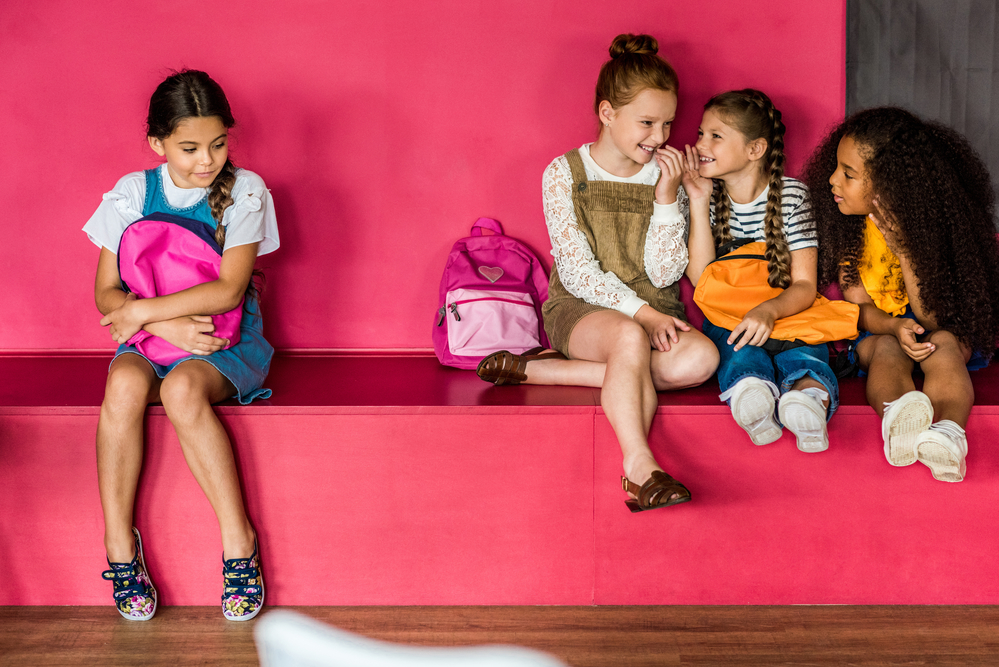
What do you do when a friend wants to do something that is unkind, thoughtless, or involves breaking the rules?
What do you do when a friend is bossy, self-centered and treats you unkindly?
If a friend treats you badly, is it okay to treat them the same way?
Relationships are messy and there are not always clear cut answers.
Good Friends and Hard Choices
Elementary school is often the first time children experience the ups and downs of friendship. Students may find themselves dealing with friends who make poor choices, act unkindly, or fail to respect boundaries. Helping students recognize healthy vs. unhealthy friendships—and giving them the social skills to respond—can set them up for a lifetime of positive relationships. Here are important concepts for students to learn:
What Makes a Good Friend?
Being a good friend isn’t just about having fun together—it’s about building trust, showing respect, and practicing kindness. Here are qualities that define a good friend:
-
Kindness – Speaks and acts in ways that are encouraging, supportive, and thoughtful.
-
Respect – Honors your boundaries, opinions, and personal space.
-
Honesty – Tells the truth, even when it’s hard.
-
Fairness – Shares, takes turns, and doesn’t try to control everything.
-
Loyalty – Stands by you, especially in difficult moments.
Key Social Skills for Positive Friendships
To build and maintain healthy friendships, students can develop:
-
Active Listening – Paying attention, making eye contact, and responding thoughtfully.
-
Conflict Resolution – Talking through disagreements without name-calling or blaming.
-
Empathy – Understanding how others feel and considering their perspective.
-
Assertive Communication – Saying what they need in a respectful way.
-
Self-Control – Managing big emotions before reacting.
Common Friendship Problems (and How to Address Them)
1. When to Move On
Sometimes a friendship becomes unbalanced or unhealthy. If a friend consistently:
-
Ignores feelings
-
Hurts with words or actions
-
Pressures into doing things that are wrong or feel uncomfortable
…it may be time to take a step back or end the friendship. Moving on is not “mean”—it’s a way of taking care of themselves.
2. When a Friend Wants You to Do Something Unkind or Against the Rules
Teach students to:
-
Pause and Think – “Is this kind? Is this safe? Would I be okay if an adult saw me doing this?”
-
Say No Respectfully – “I don’t want to do that” or “That’s not okay with me.”
-
Walk Away and Find Support – Go to a trusted adult if needed.
3. When a Friend is Bossy, Self-Centered, or Unkind
Teach students to:
-
Set Boundaries – “I’d like a turn to choose the game” or “Please stop talking to me that way.”
-
Use “I” Statements – “I feel upset when you…”
-
Choose Different Playmates – Spend more time with friends who are respectful and kind.
As adults we have many opportunities to help children navigate the murky waters of friendship. The social skills that children learn (or don’t learn!) will serve them all their lives. Everyone has a basic need to belong, to feel loved and cared for. Learning social skills at a young age will equip children in their adult years to handle the problems that arise in any friendship.
Look for opportunities to:
- Teach children to recognize their own self-worth. Kids who feel comfortable in their own skin are often the best at encouraging others to be their best selves as well. By sharing with children your vision for their authentic and best self, you are empowering them to see themselves in their best light.
- Teach children empathy. Children who are good at listening and observing other’s feelings make supportive and thoughtful friends.
- Teach children to see friendship troubles as opportunities to learn and grow. Too often we see conflict as something to be avoided or ignored rather than an opportunity to understand someone else’s perspective and develop a deeper relationship.
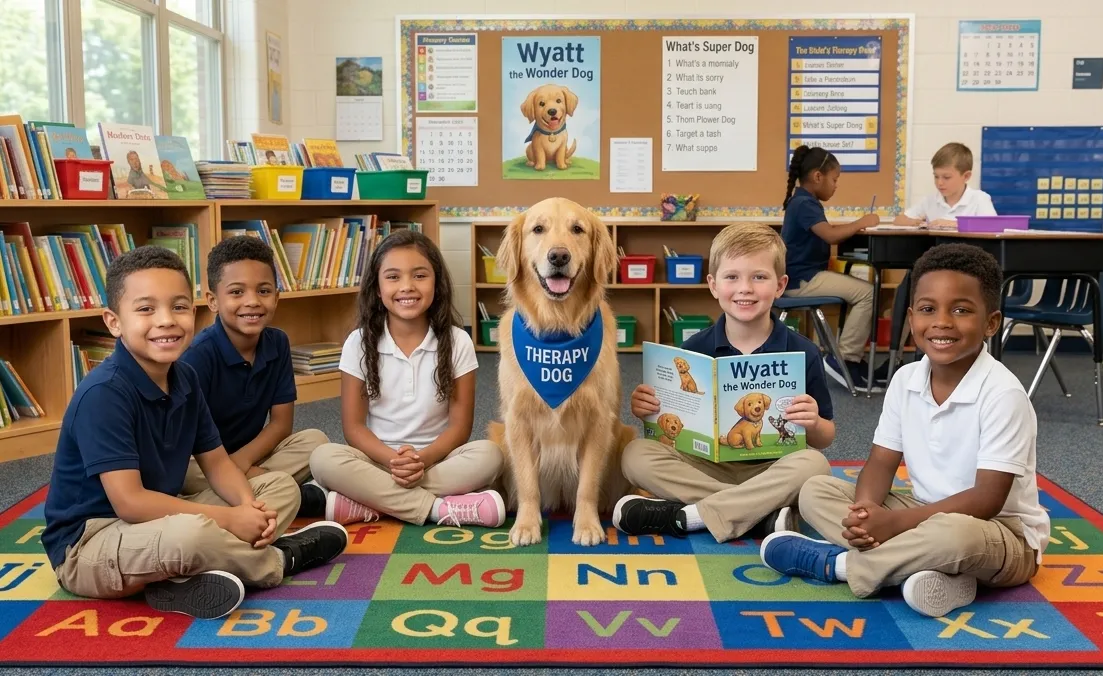
Wyatt the Wonder Dog Learns about Friendship

It’s not easy being the new kid at school, especially if you are a cat and everyone else is a dog. How do you make friends? Can you even be friends with someone who is totally different from you? Wyatt the Wonder Dog helps solve Ami’s friendship problem with empathy and compassion. A great story for teaching children the critical life skill of making friends.
As a public school elementary counselor, Wyatt offers so much about making and keeping friends. I will use this book as a resource for whole classroom, small group and individual discussions, raising issues that affect real life situations.
~Cindy Little, School Counselor, Georgia Elementary School, Milton Vermont
About Lynne Watts
Lynne Watts is a veteran elementary school counselor and the creator of the Wyatt the Wonder Dog series. Her mission is to provide educators with engaging, child-friendly tools that build character and social-emotional skills in the classroom.

Don’t Give Up Yet! Teaching Kids to Manage Frustration
Focus Power: 7 Simple Ways to Help Kids Improve Attention

Stop–Think–Choose: A Simple Impulse Control Strategy for Elementary Students
Better Behavior Plans: A Guide for School Counselors
Healthy Friendships: Boundaries Every Child Should Know

Friendship Problems? 7 Skills Kids Need to Solve Conflicts
How to Make Friends: 3 Simple Skills Every Child Needs
Everyone Belongs: 10 Ways Kids Can Be a Belonging Builder

The Friendship Formula: 7 Qualities of a Great Friend
Creating a Culture of Creativity at School
Teaching Kids to Think Creatively: 7 Strategies for Elementary School Counselors

Think Outside the Box: Teaching Creative Thinking Skills to Elementary Students

Critical Thinking Activities for Elementary School Counselors
Critical Thinking: Helping Students Think, Not Just Answer

School Counselor Self-Care: 5 Essential Ways to Renew Your Energy and Avoid Burnout

Start Strong: Five Ways Counselors Plan for a Fantastic School Year
The Science of Encouragement: What Elementary School Counselors Need to Know About Positive and Negative Comments
Using Journals in Elementary School Counseling: Simple Strategies for Big Emotional Learning

Unlocking Resilience: How Curiosity Builds Stronger, Braver Elementary Students

Caring for the Caregiver: Self-Care Strategies for Counselors During Stressful Times

School Counselor Conference Success: Tips for Learning, Networking, and Growth
Journaling for Kids: Prompts that Build Emotional Growth and Confidence

The Burnout Fix for School Counselors: How to Set Healthy Boundaries Without Guilt

School Counseling and Burnout: Why Boundaries Matter More Than Ever

Prepared to Lead: Teaching Elementary Students the Power of Being Ready
Journaling : A Powerful School Counseling Tool for Emotional Growth and Self-Reflection

Why Boredom Is Good for Kids: A School Counselor’s Guide to Building Creativity and Independence
From Overwhelmed to Empowered: Practical Burnout Solutions for School Counselors

From ‘I Have to Get It Right’ to ‘I Can Try Again’: Tackling Perfectionism in Kids

Teaching Kids to Get Better at Getting Along

Improve Communication Skills and Resolve Conflicts with Kids

The Power of Storytelling in Elementary Counseling: Helping Kids Learn Life Skills That Stick