

Lynne Watts
Author & Counselor

Empathy is the ability to understand, connect with, and respond to the feelings of others. It goes beyond sympathy or “feeling sorry for someone”—it’s the skill of recognizing someone else’s emotional experience and responding with compassion, support, or thoughtful action.
In the context of elementary school counseling and social-emotional learning, empathy is foundational. It strengthens peer relationships, encourages problem-solving, and helps students navigate school with kindness and confidence.
How Empathy Supports Resilience
Resilience is the ability to bounce back after challenges, and empathy is a core component because it helps students:
- Build strong relationships that offer emotional support
- Solve conflicts through connection instead of aggression
- Feel seen, understood, and valued by peers
- Develop perspective about challenges
- Ask for help and offer help to others
When students understand the feelings of others, they become more adaptable, socially confident, and emotionally grounded—all traits that reinforce resilience.
What Empathy Is NOT
Understanding what empathy is NOT is just as important:
Empathy is not:
- Fixing someone’s problem for them
- Taking on someone else’s emotional burden as your own
- Agreeing with everything someone says
- Feeling responsible for another person’s happiness
- Rescuing or enabling someone who is struggling
Empathy is about connection, not control. It invites understanding—not emotional self-sacrifice.
3 Types of Empathy Students Should Learn
| Type of Empathy | Definition | Example for Students |
| Affective Empathy | Feeling or sharing the emotions of others | “I see my friend crying and I feel sad too.” |
| Cognitive Empathy | Understanding how someone might feel and why | “My classmate is frustrated because they studied hard and still didn’t pass.” |
| Behavioral Empathy | Taking action to support someone in a kind and respectful way | “I ask if they want to talk, offer to sit with them, or let them have space.” |
Teaching all three helps students develop a balanced empathy skillset that fuels connection and resilience.
Practical Ways to Teach Empathy in Elementary School
School counselors can build empathy into SEL lessons, small groups, individual sessions, and classroom guidance by using:
- Emotion Identification Practice
- Feelings charts
- Daily mood check-ins
- “Name it to tame it” language practice
Goal: Students learn to label their own emotions and better identify others’.
- Perspective-Taking Scenarios
Create short stories, skits, or role play activities:
- “How might the character feel?”
- “What could you say that shows you understand?”
Goal: Develop cognitive empathy + social problem solving.
- Circle Discussions / Restorative Conversations
Use structured prompts:
- “What happened?”
- “How did it make you feel?”
- “What do you need now?”
Goal: Build reflective communication.
- Active Listening Exercises
Model and practice:
- Eye contact
- Paraphrasing
- Non-verbal cues
Goal: Practice behavioral empathy.
- Story-Based Counseling Lessons
Use books, videos, or classroom narratives. Stories help students:
- Visualize feelings
- Build emotional vocabulary
- Practice empathic responses in a safe context
(If you have Wyatt the Wonder Dog resources, this is an excellent place to plug them.)
- Classroom Jobs or Service Opportunities
- Peer helpers
- Buddy bench support
- Welcoming new students
Goal: Move empathy beyond concepts into action.
The Benefits of Empathy for Students
Teaching empathy in elementary school leads to:
- Stronger peer relationships
- Reduced bullying and conflict
- Higher emotional self-regulation
- Increased resilience and coping skills
- Greater sense of belonging
- Improved academic focus due to reduced stress
- Stronger problem-solving and communication skills
- A more positive school climate
Empathy is not just a social skill—it’s a protective factor that empowers students to face challenges with confidence, compassion, and resilience.
If your goal is to help students become resilient, successful, and compassionate, start with empathy. When children learn to understand others, they learn to understand themselves—and that internal clarity becomes a foundation for lifelong resilience.
Empathy is more than a lesson; it’s a mindset and one of the most powerful tools you can give a child.
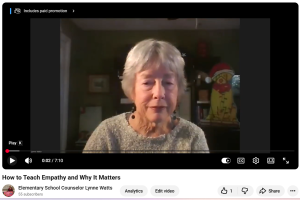
Watch Video Here
About Lynne Watts
Lynne Watts is a veteran elementary school counselor and the creator of the Wyatt the Wonder Dog series. Her mission is to provide educators with engaging, child-friendly tools that build character and social-emotional skills in the classroom.

Stop–Think–Choose: A Simple Impulse Control Strategy for Elementary Students

Better Behavior Plans: A Guide for School Counselors
Healthy Friendships: Boundaries Every Child Should Know

Friendship Problems? 7 Skills Kids Need to Solve Conflicts
How to Make Friends: 3 Simple Skills Every Child Needs

Everyone Belongs: 10 Ways Kids Can Be a Belonging Builder

The Friendship Formula: 7 Qualities of a Great Friend

Creating a Culture of Creativity at School
Teaching Kids to Think Creatively: 7 Strategies for Elementary School Counselors

Think Outside the Box: Teaching Creative Thinking Skills to Elementary Students

Critical Thinking Activities for Elementary School Counselors
Critical Thinking: Helping Students Think, Not Just Answer

School Counselor Self-Care: 5 Essential Ways to Renew Your Energy and Avoid Burnout

Start Strong: Five Ways Counselors Plan for a Fantastic School Year

The Science of Encouragement: What Elementary School Counselors Need to Know About Positive and Negative Comments
Using Journals in Elementary School Counseling: Simple Strategies for Big Emotional Learning

Unlocking Resilience: How Curiosity Builds Stronger, Braver Elementary Students

Caring for the Caregiver: Self-Care Strategies for Counselors During Stressful Times

School Counselor Conference Success: Tips for Learning, Networking, and Growth

Journaling for Kids: Prompts that Build Emotional Growth and Confidence

The Burnout Fix for School Counselors: How to Set Healthy Boundaries Without Guilt

School Counseling and Burnout: Why Boundaries Matter More Than Ever

Prepared to Lead: Teaching Elementary Students the Power of Being Ready

Journaling : A Powerful School Counseling Tool for Emotional Growth and Self-Reflection

Why Boredom Is Good for Kids: A School Counselor’s Guide to Building Creativity and Independence
From Overwhelmed to Empowered: Practical Burnout Solutions for School Counselors

From ‘I Have to Get It Right’ to ‘I Can Try Again’: Tackling Perfectionism in Kids

Teaching Kids to Get Better at Getting Along

Improve Communication Skills and Resolve Conflicts with Kids

The Power of Storytelling in Elementary Counseling: Helping Kids Learn Life Skills That Stick

Change Happens: Teaching Elementary Students How to Adapt With Confidence
Teaching Integrity in Elementary School: How Reflective Questions Build Critical Thinking and Strong Character